
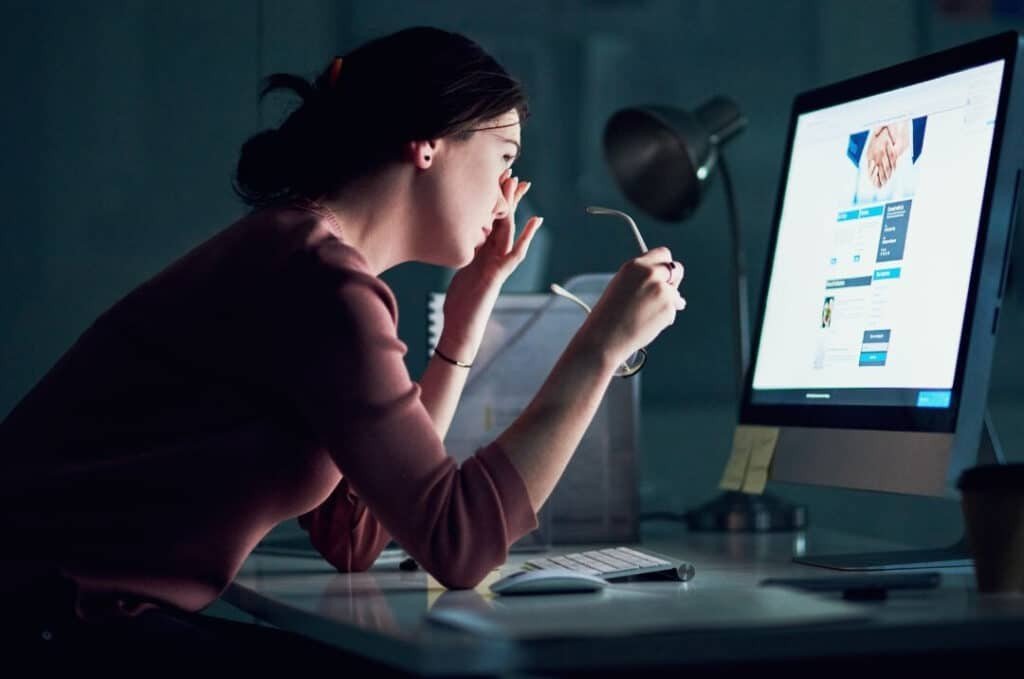
Spending long hours on computers, smartphones, tablets, and other digital devices has become part of everyday life. However, prolonged screen use can lead to tired, dry, or uncomfortable eyes. Understanding Screen Time and Eye Health in Gurugram is especially important for students, working professionals, and people who spend several hours a day using digital devices. The good news is that many screen-related eye symptoms can be reduced with simple habits, regular breaks, and appropriate eye care.
For fast information, direct chat with us on WhatsApp.
How Does Too Much Screen Time Affect Your Eyes?
When you look at a screen for a long period, your eyes continuously focus at a nearby distance. People also tend to blink less while concentrating on digital content. Reduced blinking can increase tear evaporation and contribute to dryness and irritation.
Digital eye strain, also called computer vision syndrome, can include symptoms such as tired eyes, blurred vision, headaches, dryness, redness, burning, and difficulty focusing. These symptoms may become more noticeable after prolonged computer or smartphone use.
This is why Screen Time and Eye Health in Gurugram should be considered an important part of daily eye-care habits, particularly for people with long working hours.

Common Eye Problems Caused by Excessive Screen Time
1. Digital Eye Strain
Digital eye strain is one of the most common complaints associated with prolonged screen use. You may experience tired eyes, discomfort around the eyes, headaches, or temporary difficulty focusing after extended screen sessions.
Digital eye strain is usually related to how the eyes are being used rather than the screen causing permanent damage to the eyes. Taking regular breaks can help reduce these symptoms.
2. Dry and Irritated Eyes
Dry eyes are another common concern for frequent screen users. When concentrating on a screen, people may blink less often. This can allow the tear film on the surface of the eye to evaporate more quickly.
You may notice burning, itching, a gritty feeling, redness, or excessive watering. Spending a long time on computers, tablets, or smartphones can contribute to dry-eye symptoms.
3. Blurred or Temporary Vision Changes
After several hours of screen use, some people experience temporary blurred vision or difficulty changing focus between near and distant objects.
These symptoms may occur because the eyes have been continuously working at a close distance. Uncorrected vision problems can also make digital eye strain more noticeable.
If blurred vision continues even after taking a break from screens, an eye examination may be appropriate.
4. Headaches and Eye Discomfort
Long periods of close-up screen work can be associated with headaches and discomfort around the eyes. Poor lighting, screen glare, an incorrect viewing distance, or an uncorrected refractive error may contribute to the problem.
If headaches repeatedly occur after computer or smartphone use, it is useful to discuss the symptoms with an eye-care professional.
5. Difficulty Focusing
Your eyes constantly adjust when looking at objects at different distances. Extended near work can make some people feel that their eyes are taking longer to refocus after looking away from a screen.
Children and adults with underlying focusing or binocular vision problems may experience more noticeable symptoms during prolonged close-up activities.
Screen Time and Eye Health in Gurugram: Who Is More at Risk?
People who spend many hours working on computers may be particularly prone to digital eye strain. Students attending online classes, professionals working remotely, software employees, content creators, and people who frequently use smartphones may also experience symptoms.
The risk of discomfort can increase when screen use is combined with dry indoor air, air conditioning, glare, poor posture, inadequate breaks, or contact lens use.
Therefore, paying attention to Screen Time and Eye Health in Gurugram can help people identify unhealthy screen habits before they become a regular source of discomfort.
How Can You Protect Your Eyes From Screen Time?
Follow the 20-20-20 Rule
One of the simplest ways to reduce digital eye strain is the 20-20-20 rule. Every 20 minutes, look at something approximately 20 feet away for at least 20 seconds.
This gives your eyes a short break from continuous near focusing. The National Eye Institute and American Academy of Ophthalmology both recommend regular breaks as part of healthy screen habits.
Blink More Frequently
Make a conscious effort to blink while working on a computer or using a smartphone. Frequent blinking helps maintain moisture on the surface of the eyes.
If your eyes regularly feel dry, an eye specialist can determine whether you have dry eye or another underlying condition.
Adjust Screen Position and Lighting
Keep your screen at a comfortable distance and position it so that you are looking slightly downward. Avoid strong glare from windows or overhead lighting.
Adjusting screen brightness and contrast can also make viewing more comfortable.
Take Regular Breaks
Do not wait until your eyes become very tired before taking a break. Short, regular breaks throughout the working day can be more helpful than continuing for several hours without resting your eyes.
During breaks, consider standing up, walking around, or looking at distant objects instead of immediately switching from a computer to a smartphone.
Avoid Excessive Screen Use Before Bed
Screens can also affect sleep routines, particularly when used late at night. The American Academy of Ophthalmology notes that avoiding screen use for a few hours before bedtime may help reduce sleep disruption.
Does Blue Light From Screens Damage the Eyes?
Blue light is often discussed in relation to digital eye strain. However, current guidance from the American Academy of Ophthalmology does not support the idea that ordinary computer-screen blue light causes eye disease. The temporary discomfort associated with prolonged screen use is more closely related to factors such as reduced blinking and continuous near focusing.
Blue-light-filtering glasses are therefore not a substitute for healthy screen habits, appropriate breaks, and a professional eye examination when symptoms persist.

When Should You See an Eye Specialist?
Occasional tiredness after a long day of screen use may improve with rest. However, persistent or worsening symptoms should not simply be attributed to screen time.
Consider scheduling an eye examination if you experience frequent blurred vision, persistent dryness, recurring headaches, eye pain, double vision, significant redness, or difficulty focusing.
A comprehensive eye examination can also identify refractive errors and other eye conditions that may not be obvious from symptoms alone.
For people concerned about Screen Time and Eye Health in Gurugram, professional evaluation can help determine whether symptoms are related to digital eye strain or another eye condition.
Frequently Asked Questions
1. Can too much screen time cause dry eyes?
Yes. Prolonged screen use can reduce blinking, which may increase tear evaporation and contribute to dry-eye symptoms such as burning, irritation, and a gritty sensation.
2. What is the 20-20-20 rule for eye health?
The 20-20-20 rule means looking at an object about 20 feet away for at least 20 seconds after every 20 minutes of screen use. It is a simple way to give your eyes regular breaks.
3. Can screen time permanently damage eyesight?
Typical screen use is associated mainly with temporary digital eye strain symptoms. However, persistent visual symptoms should be evaluated because they can sometimes be related to an underlying vision or eye problem.
4. Are blue-light glasses necessary for computer users?
Blue-light-blocking glasses have not been shown to prevent digital eye strain, and the American Academy of Ophthalmology does not recommend them specifically for protecting the eyes from computer-screen blue light.
5. When should I consult an eye specialist for screen-related symptoms?
If symptoms such as blurred vision, persistent dryness, headaches, eye pain, redness, or difficulty focusing continue despite taking regular breaks, an eye examination is advisable.
Conclusion
Digital devices are an essential part of modern life, but healthy screen habits can help reduce unnecessary eye discomfort. Regular breaks, frequent blinking, comfortable screen positioning, suitable lighting, and appropriate eye examinations can support better visual comfort.
Understanding Screen Time and Eye Health in Gurugram is particularly important for people who spend long hours on computers and smartphones. If screen-related symptoms are persistent, do not ignore them. A professional eye examination can help identify the cause and guide appropriate care.